
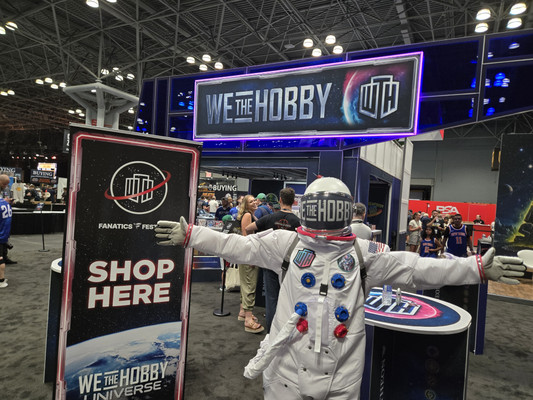
Displayit is known for trade show booths that include backdrops, trade show kits, and banner stands, but we can go bigger, too. We also offer trade show booth rentals in the form of Island Displays and Custom Booths like this 50x50 Double-Decker that WeTheHobby used to exhibit at Fanatics Fest 2026! Earlier this year, the team at WeTheHobby came to us with a challenge: build a 50x50 double-decker trade show booth for Fanatics Fest that would 10X their retail space, host live content production, and create a VIP experience on a second level. They gave us five months to go from concept to show floor. This is how we designed, built, and installed one of the most complex booth builds in Displayit history, and what exhibitors at any booth size can learn from the process.
What did WeTheHobby need from their Fanatics Fest booth?
WeTheHobby is a sports card and collectibles brand that has exhibited at Fanatics Fest for three years running. Last year, they had a 30x30 booth. This year, they upgraded to a 50x50 space with a completely different vision. Their CEO, Zach Stanley, and the team had specific goals for every square foot:
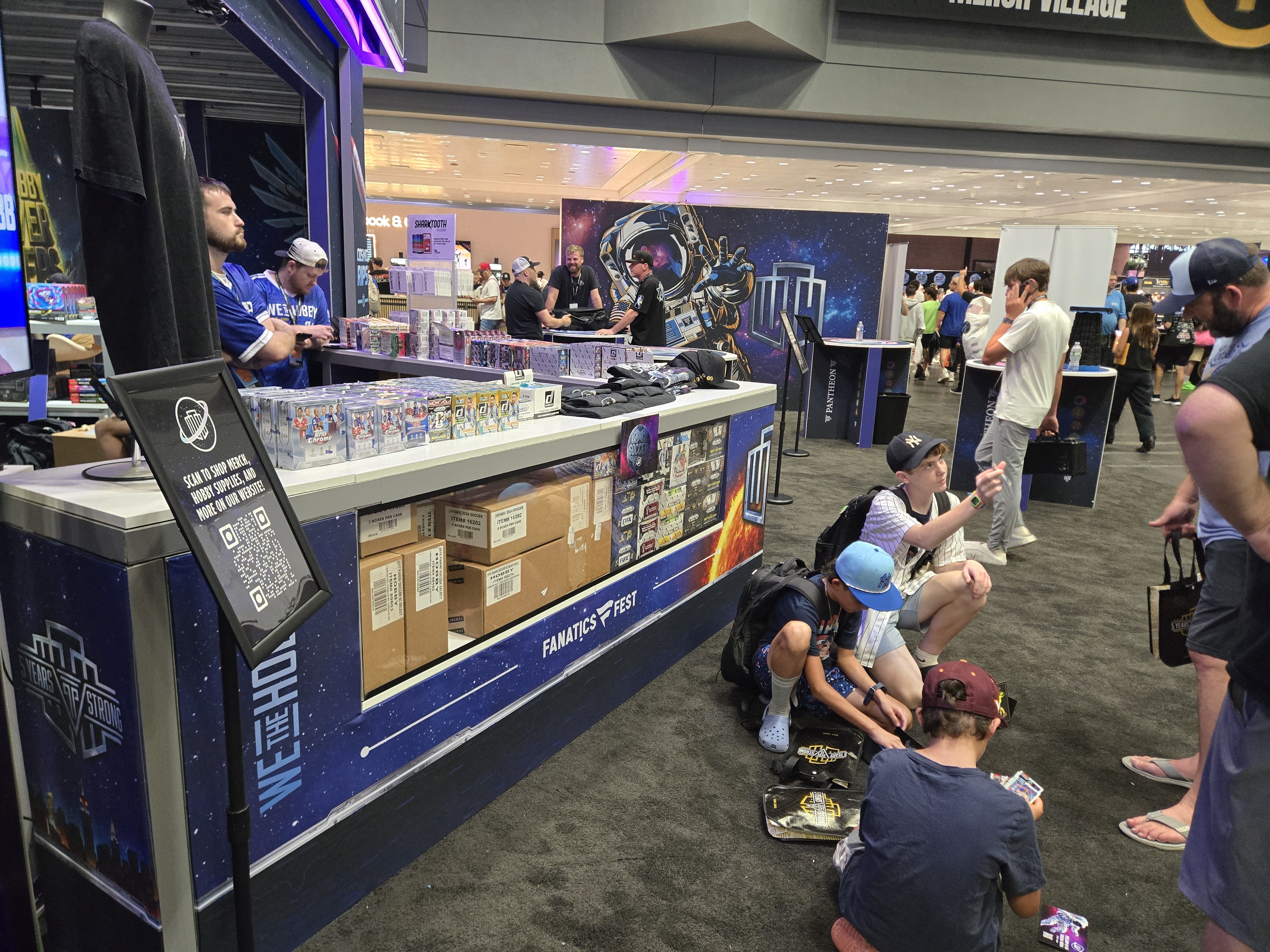
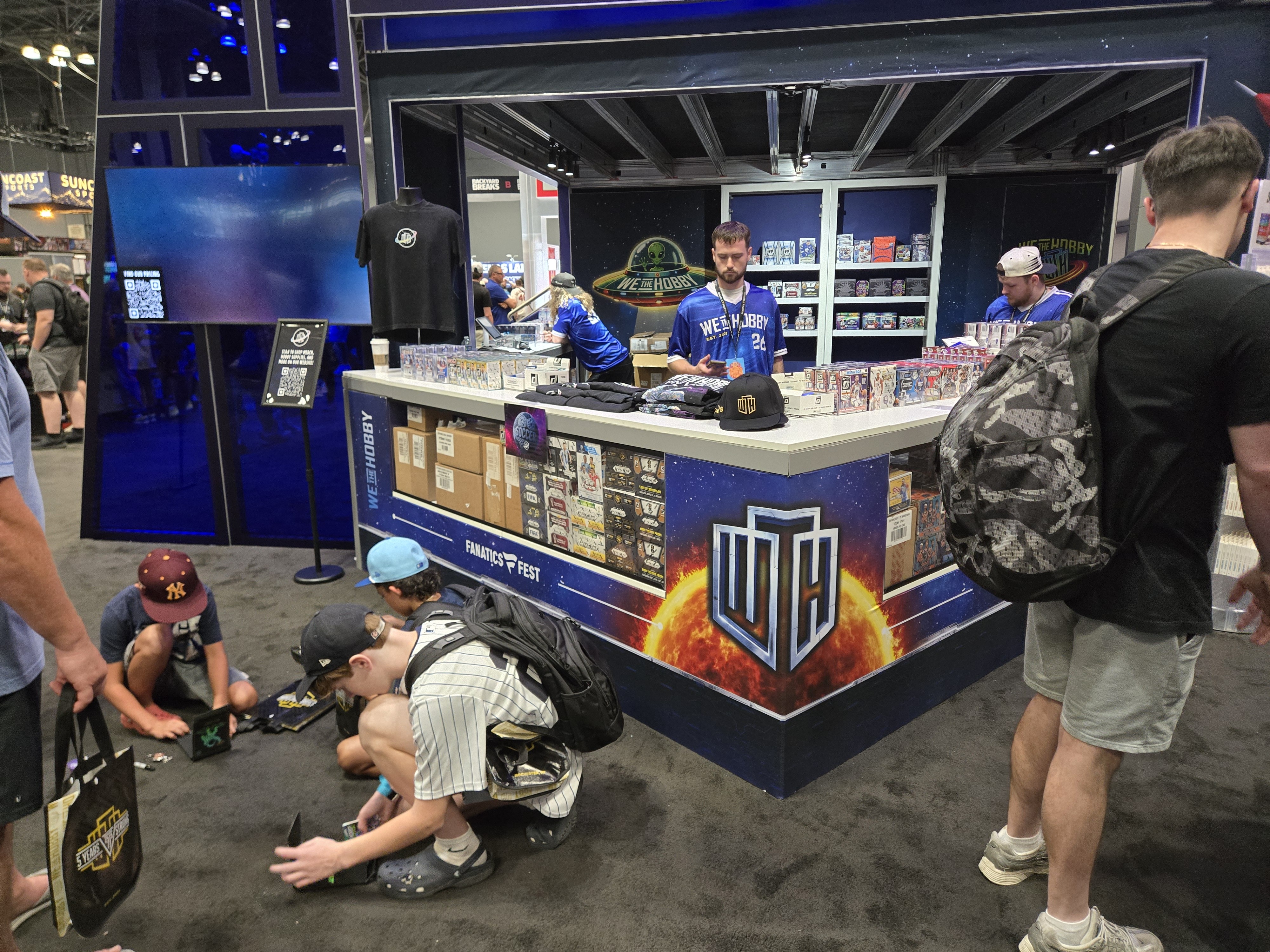
- A retail store, not a retail table. Last year's retail space was small and constrained. This year, WeTheHobby wanted retail to be a feature of the booth, not an afterthought. The goal was to 10X their retail revenue from the previous year.
- A defined breaking area where their talent could stream live from the show.
- A podcast area for on-site recording with guests and partners during the event.
- Trading tables for the sports card community to sit, trade, and interact with the brand.
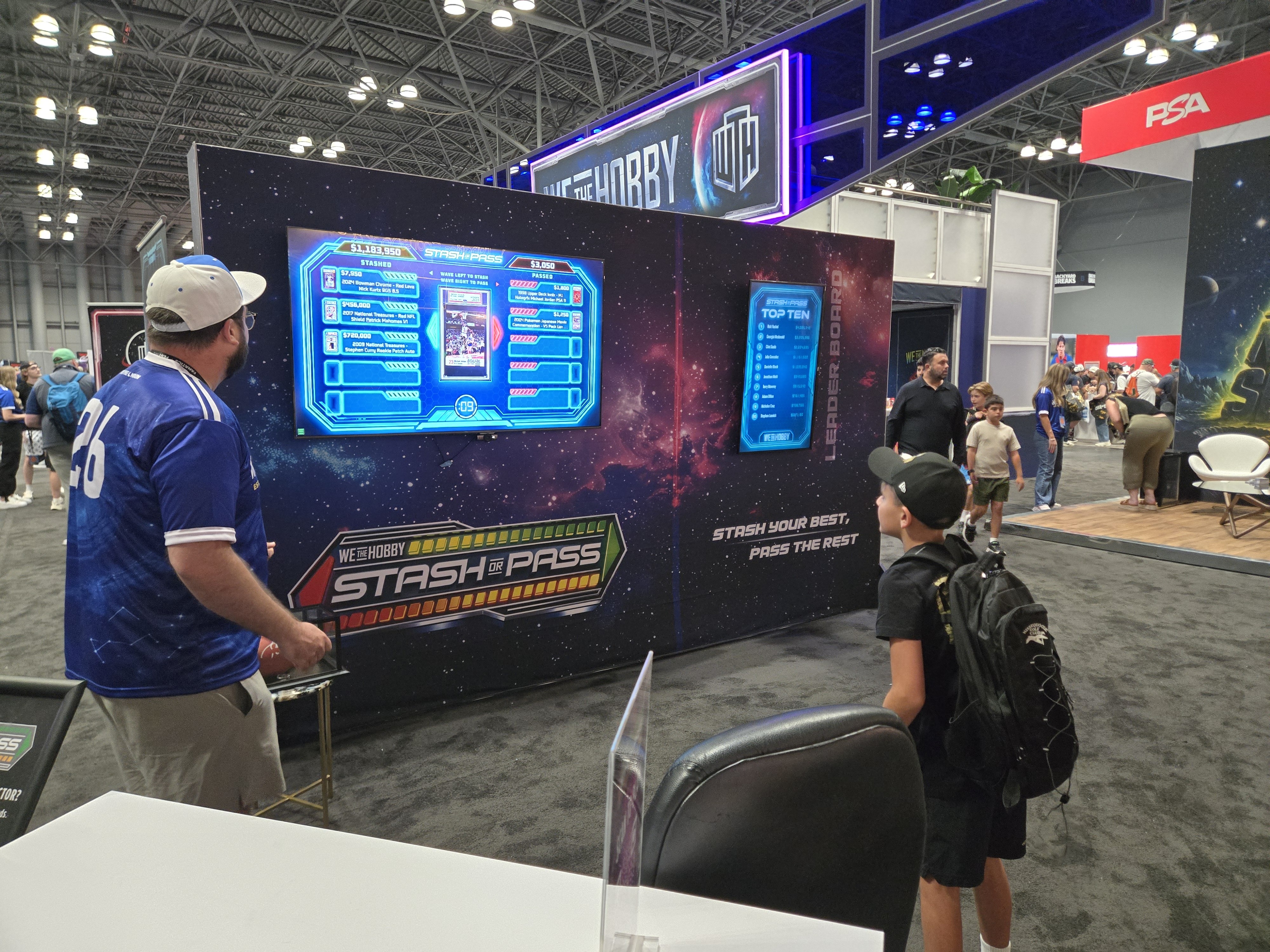
- A fan activation area for their live game experience.
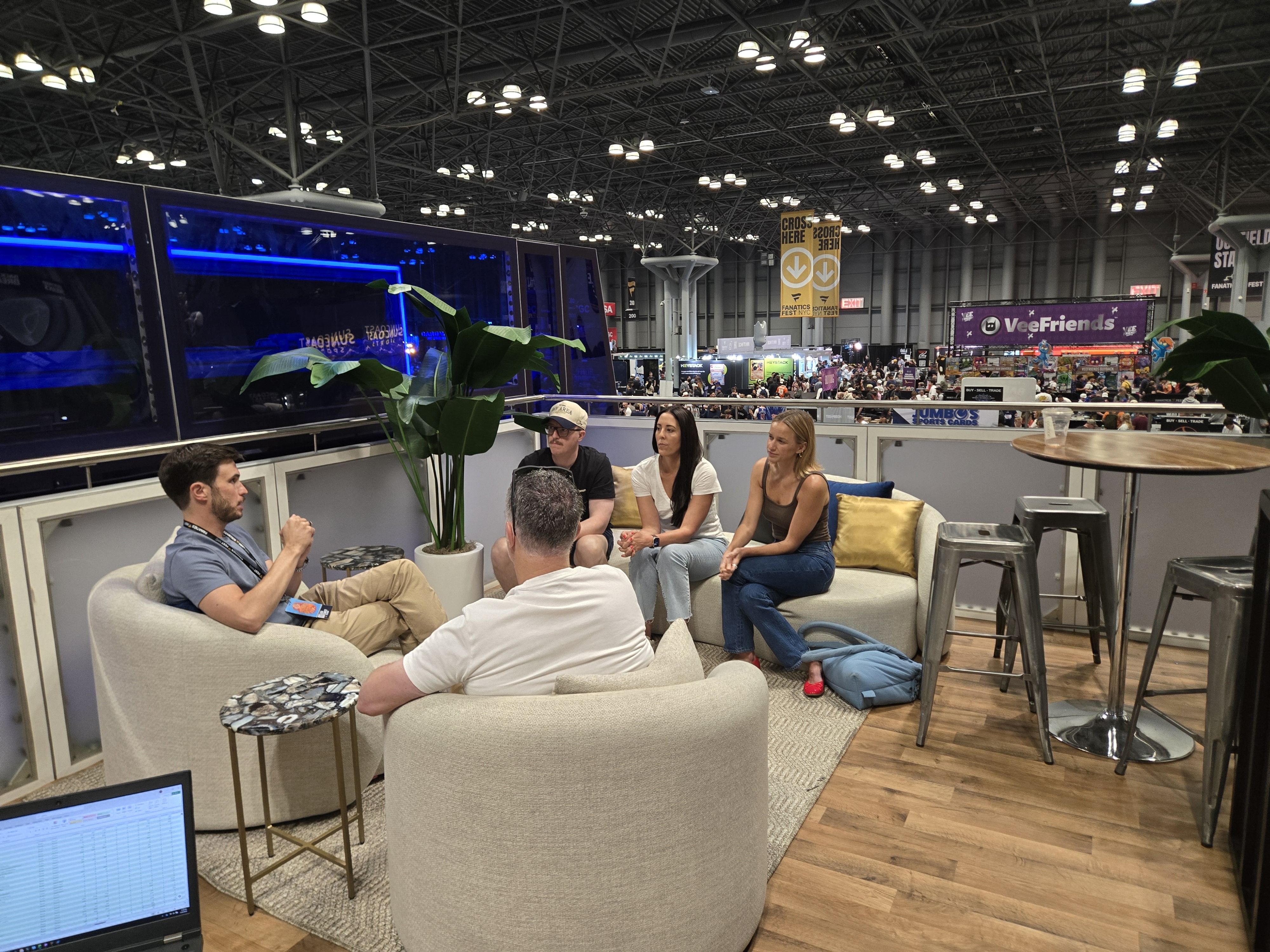
- A VIP deck on a second level for high-level meetings and exclusive trading sessions.
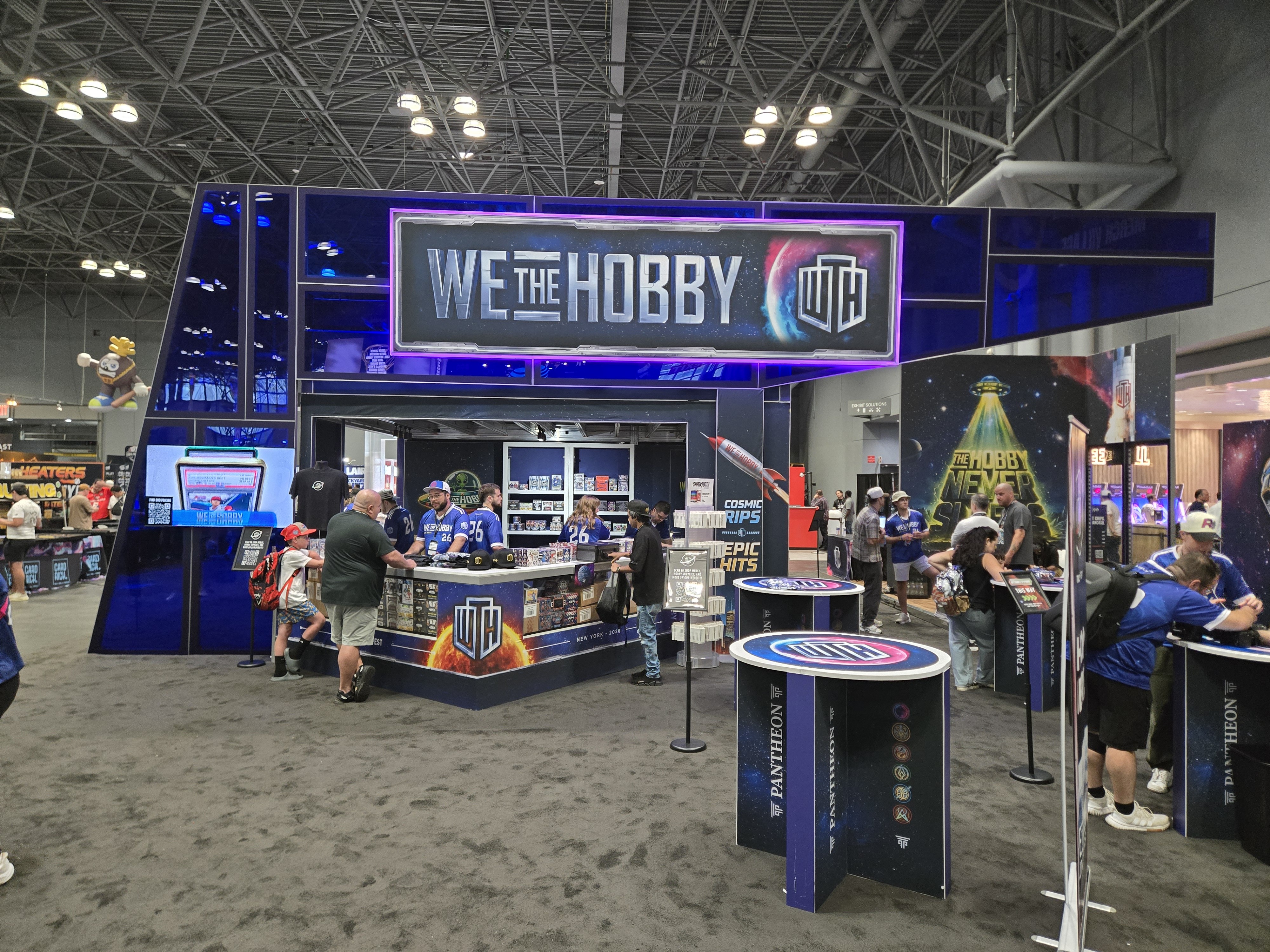
The challenge was creating all of these defined areas within a single 50x50 footprint while making the overall space feel like one cohesive brand experience rather than a collection of disconnected sections. That required a trade show booth design that balanced function, flow, and visual identity from every angle.
How did the booth design come together?
The project was approximately five months from initial concept to show floor. WeTheHobby's two main points of contact, Sam Peebles and Chris Pelczynski, worked with our team throughout the process. And when I say our team, I mean literally everyone at Displayit was involved at some point: design, engineering, production, printing, and on-site installation.
The design process started with the functional requirements. We mapped out how attendees would move through the space: enter from the aisle, see the retail store first, discover the breaking and podcast areas deeper in the booth, and access the VIP deck via a staircase. Every zone had to be visible enough to draw people in but distinct enough to serve its purpose without bleeding into the next area.
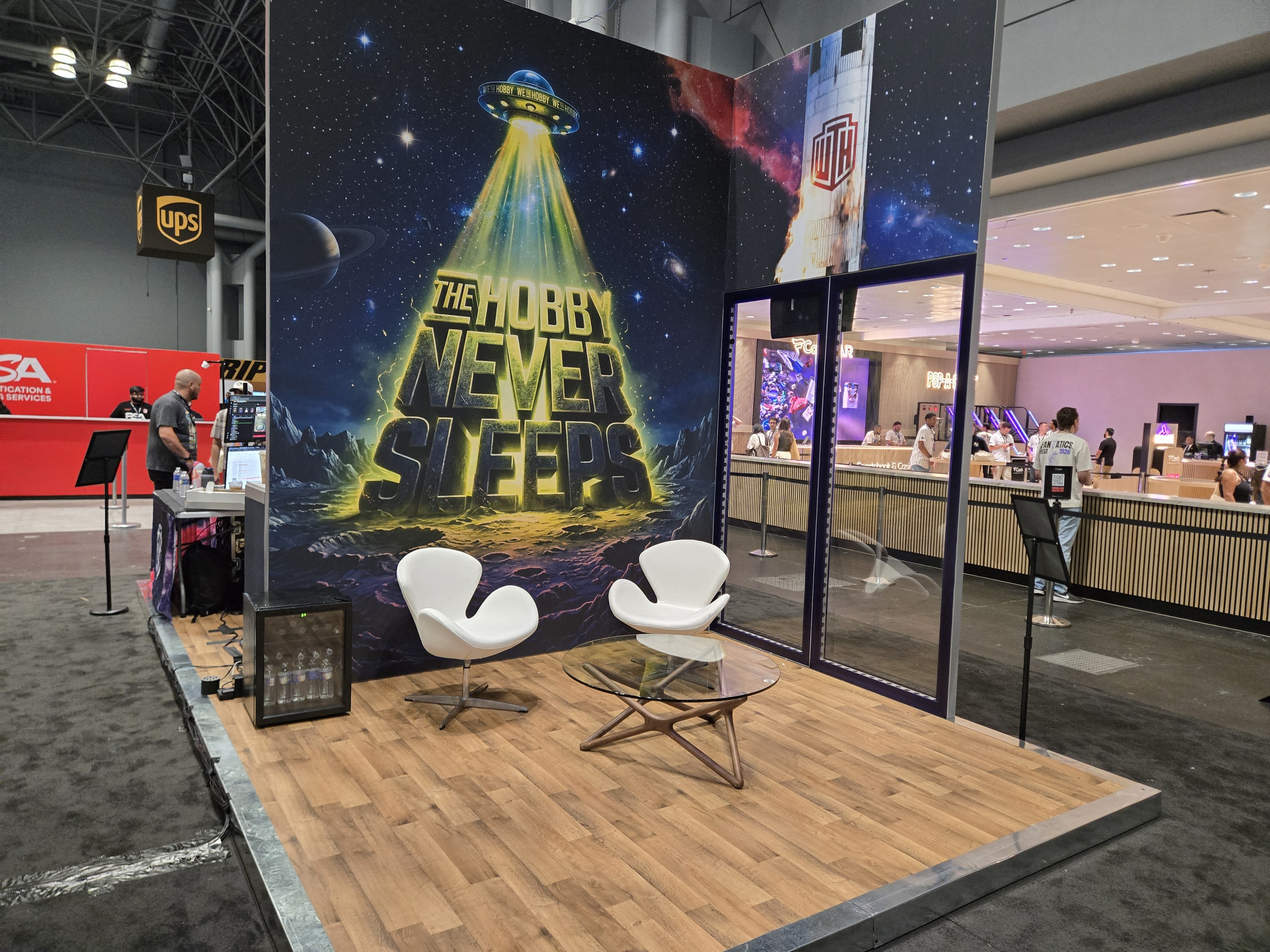
The anchor of the entire trade show booth design was a large facade with edge lighting that served as the primary visual focal point. It was visible from across the Fanatics Fest floor and immediately communicated that this was not a standard booth. Behind and beneath the facade, each functional zone was built out with its own branded elements, furniture, and signage.
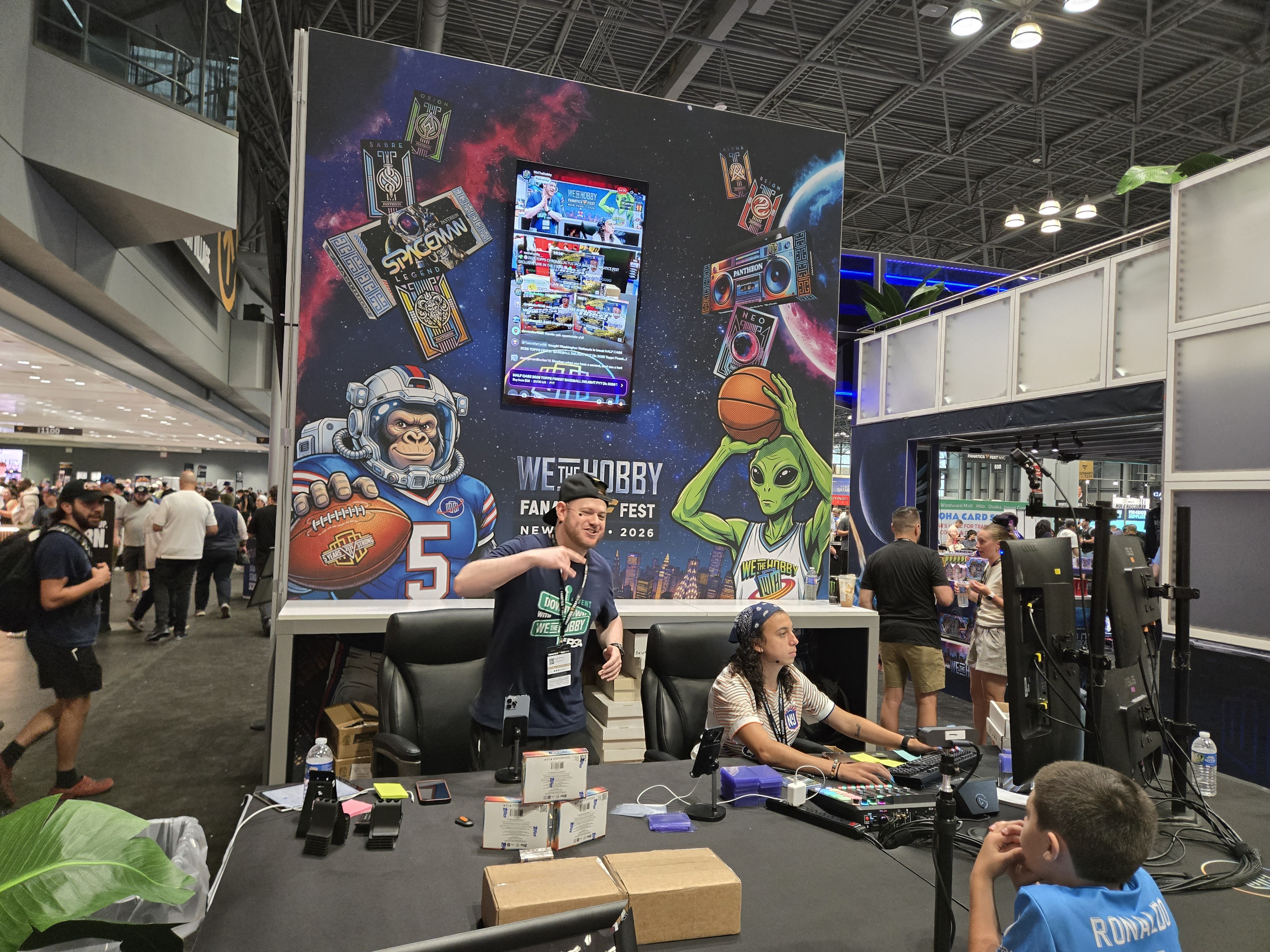
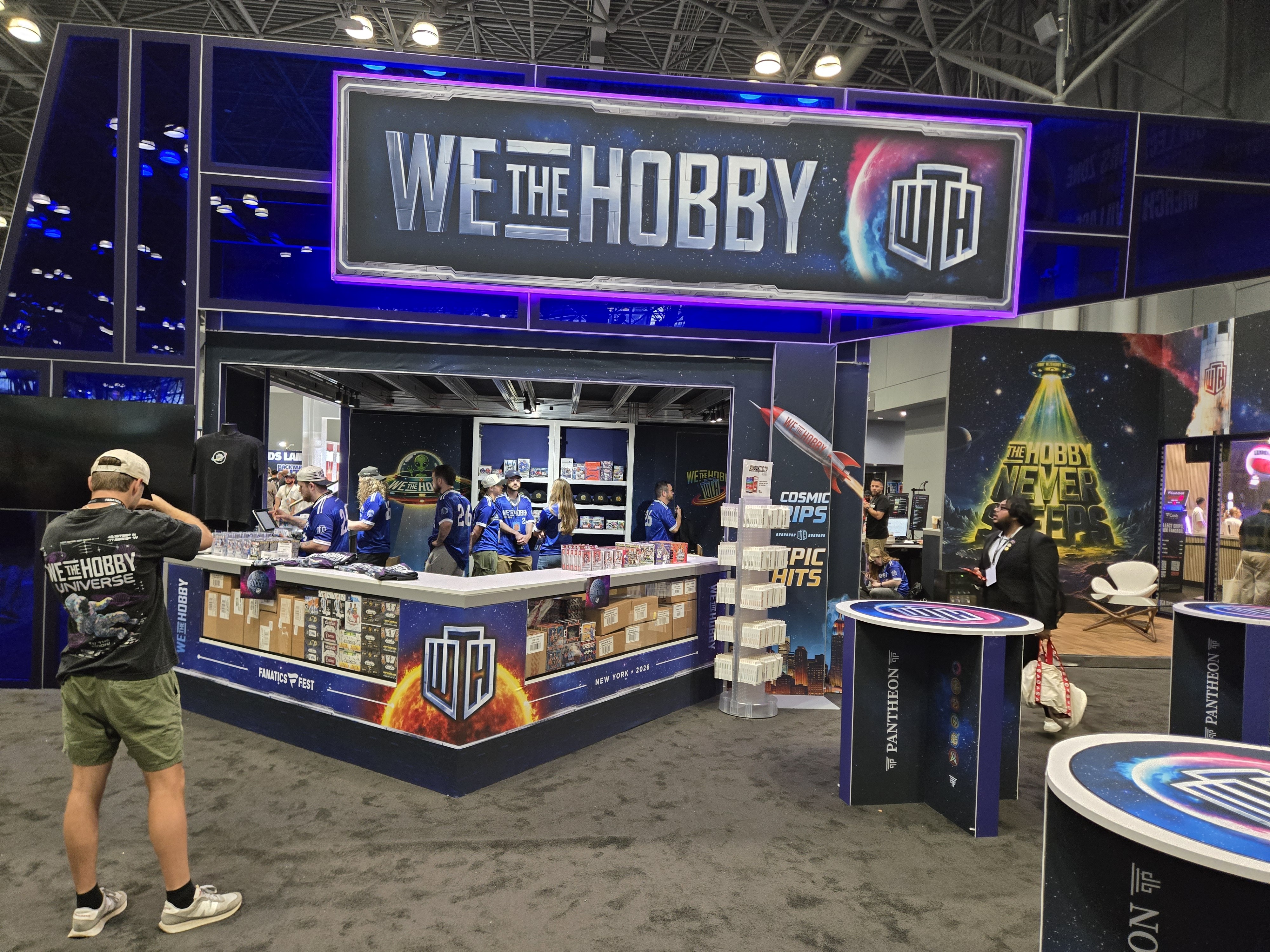
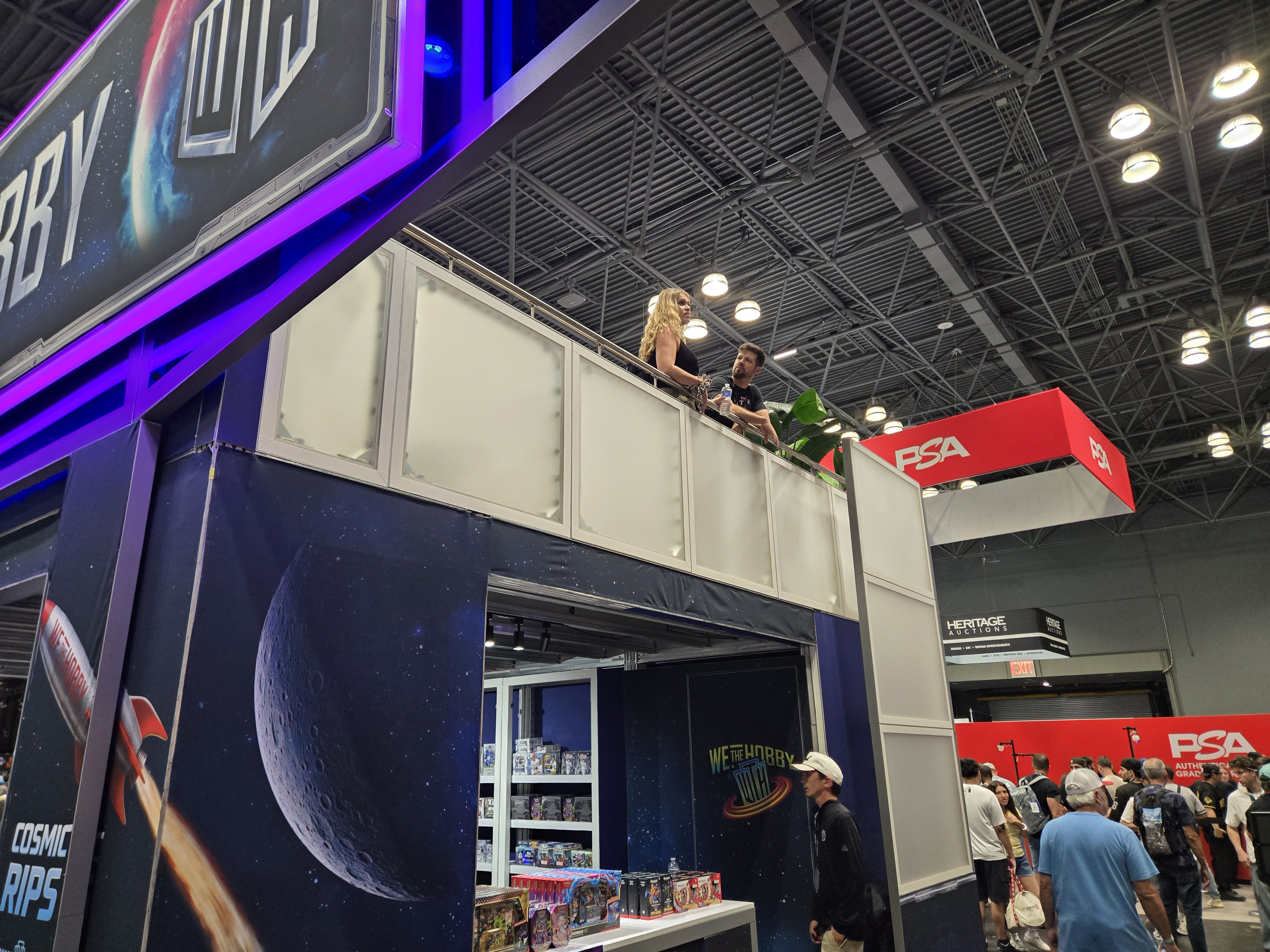
The retail space was positioned underneath the upper deck, giving it a defined ceiling and an enclosed, store-like feel. This was a deliberate design decision: attendees walking into the retail area felt like they were entering a shop, not browsing a table at a trade show. That shift in perception was a major factor in WeTheHobby's goal to transform their retail performance.
What made this booth unique to build?
We have built thousands of trade show displays at Displayit, but this project pushed us into new territory. Several elements made the WeTheHobby booth unlike anything we had done before:
The double-decker. A two-story booth structure with a raised platform and a full VIP area on the second level. The upper deck required engineering for load capacity, staircase access, safety railings, and a floor plan that felt spacious rather than cramped at elevation. This is not a standard build for any trade show display company.
The large facade with edge lighting. The primary focal point of the booth was a tall branded facade that extended above the booth line and featured edge lighting that made it glow from a distance. Designing and attaching the facade required custom engineering and on-site problem solving to ensure it was structurally sound and visually seamless.
Creating distinct zones within one cohesive space. Retail, breaking, podcast, trading, activation, and VIP all had to coexist in 2,500 square feet without the booth feeling fragmented. We accomplished this by using consistent branding and materials across every zone while differentiating each area through layout, furniture, and lighting rather than visual breaks in the design.
What did the on-site build look like?
Installation took 36 hours with a crew of 6 to 8 people, not including our project leads on-site. For context, a standard 10-foot backwall sets up in 10 minutes with one person. A build of this scale is a fundamentally different operation.
The biggest on-site challenge was the heat. Although temperatures on the show floor were around 80 degrees, outside it was nearly 100 degrees during install. Our crew worked through it, problem-solving the deck construction, facade attachment, and edge lighting integration in real time. This is the part of trade show booth design that never shows up in a product spec sheet: the ability to adapt on the floor when conditions are not ideal and the build has to be ready on schedule regardless.
When Zach Stanley, WeTheHobby's CEO, walked the finished booth before the show opened, his reaction was direct: "This looks amazing. It's exactly what we wanted."
What were the results?
WeTheHobby's primary goal was to 10X their retail revenue from the previous year's Fanatics Fest. Post-show feedback from the team was two words: "Retail crushed." The retail store design, positioned under the deck with an enclosed, shop-like environment, transformed the way attendees interacted with WeTheHobby's products.
The relationship between Displayit and WeTheHobby continues to grow. They started with a 30x30 booth last year, expanded to a 50x50 this year, and are already discussing going larger for next year's Fanatics Fest. That progression, from mid-size exhibit to large-format destination booth, is something we see across our long-term client relationships. Jay shared his thoughts on the experience on LinkedIn.
More photos from the WeTheHobby booth at Fanatics Fest
What can exhibitors at any booth size learn from this build?
You do not need a 50x50 double-decker booth to apply the principles that made this project successful. The same design thinking scales down to a 10x10 booth or a 10x20 booth:
- Define your zones, even in a small space. WeTheHobby had retail, breaking, podcast, trading, activation, and VIP. A 10x10 booth can have two zones: a public zone at the front for aisle engagement and a semi-private zone at the back for conversations. The principle is the same. For practical 10x10 layout ideas, see: 10x10 Trade Show Booth Ideas by Budget.
- Create a visual focal point. WeTheHobby's facade with edge lighting was visible from across the hall. In a 10x10 booth, your backlit display serves the same purpose. One strong visual anchor draws people in better than four equally weighted elements competing for attention.
- Design for how attendees move, not just how the booth looks. WeTheHobby mapped the attendee journey from aisle to retail to deeper engagement zones. In a 10x10, this means keeping the front open and placing your highest-value interaction point (demo, lead capture, product display) where visitors naturally stop. For booth layout principles, see: Trade Show Booth Design Principles and Mistakes.
- Start where you are and scale up. WeTheHobby started with a 30x30, grew to a 50x50, and is planning to go larger. Most Displayit customers start with a banner stand or a backwall and upgrade from there. The best booth is the one you can execute well at your current level, not the one that stretches your budget beyond what the show warrants.
- Consider renting before buying at larger sizes. If you are testing a larger booth size for the first time, Displayit offers trade show booth rentals that let you experience a bigger footprint at a fraction of the purchase cost. It is a smart way to validate that a 10x20 or larger space is right for your events before committing to a full purchase. We offer rentals in the form of Island Displays and Custom Booths like this 50x50 Double-Decker shown in this post at Fanatics Fest.
Every Displayit trade show display, from a $200 retractable banner stand to a large-format build like this one, is designed, printed, and built by the same team at our Buford, GA facility. If you are planning your next booth, whether it is your first 10x10 or a multi-level convention presence, talk to our team. Or browse all trade show displays to see the full range of what we build.

About the Author
Jay Squillace is a Sales Consultant at Displayit, and one of the most trusted voices representing the brand as well as the trade show display industry. Jay builds long-term relationships with his clients, working with them across multiple shows and years to evolve their booth presence as their business grows. His approach goes beyond matching products to specs: Jay works to understand each client's event objectives, audience, and brand, and he treats every project with the same level of care whether it is a single banner stand or a 50x50 double-decker build. To work with Jay directly, book a meeting with him here.