
The first time you open a trade show exhibitor prospectus, the floor plan can look like a foreign language. Inline, peninsula, island, corner. 10x10, 10x20, 20x20. Every trade show booth size comes with different rules, different costs, and different display requirements. At Displayit, we have been manufacturing trade show displays in Buford, Georgia since 1996, and we have helped more than 10,000 exhibitors figure out exactly which booth size and configuration works for their goals and budget. This guide breaks down every standard trade show booth size, explains the four booth configurations you will see on any floor plan, and recommends what to put inside each one.
What Are the Four Trade Show Booth Configurations?
Every trade show floor plan uses the same four booth configurations. The configuration determines how many sides of your booth are open to aisle traffic, and it directly affects your visibility, your display setup, and your cost. Here is how they compare.
| Configuration | Open Sides | Typical Sizes | Best For | Relative Cost |
|---|---|---|---|---|
| Inline (Linear) | 1 (front only) | 10x10, 10x20 | First-time exhibitors, budget-conscious teams | $ |
| Corner (Endcap) | 2 (front + one side) | 10x10, 10x20 | More visibility without premium pricing | $$ |
| Peninsula | 3 (front + two sides) | 20x20, 20x30 | Established brands with larger budgets | $$$ |
| Island | 4 (all sides open) | 20x20, 30x30, 40x40+ | Enterprise exhibitors, major product launches | $$$$ |
Inline booths are the most common configuration at any trade show. Your booth sits in a row with other exhibitors, sharing walls on both sides and the back. The front of the booth faces the aisle, giving you one open side for attendee traffic. We see about 85% of first-time exhibitors start with an inline booth because the booth space is affordable and the display setup is straightforward. A single backwall covers the rear of the booth, and everything faces forward.
Corner booths (also called endcap booths) sit at the end of a row, giving you two open sides. Attendees can approach from the front and from one side, which increases your visibility without a major cost jump. Corner booth space typically costs 10% to 20% more than an inline booth of the same size, and they work well with an L-shaped display or two perpendicular backwalls.
Peninsula booths have three open sides and typically start at 20x20. They project outward from one aisle, with the back side attached to another booth or a wall. Peninsula booths give you significant visibility from three directions, but they require more display hardware and a larger investment in both booth space and setup labor.
Island booths are standalone spaces with all four sides open to traffic. They are the premium option on any trade show floor. Island booths start at 20x20 and can run to 50x50 or larger at major shows like CES and NRF. They require overhead signage, multiple branded surfaces, and a significantly larger budget for both space rental and display hardware.
What Trade Show Booth Size Is Best for a First-Time Exhibitor?
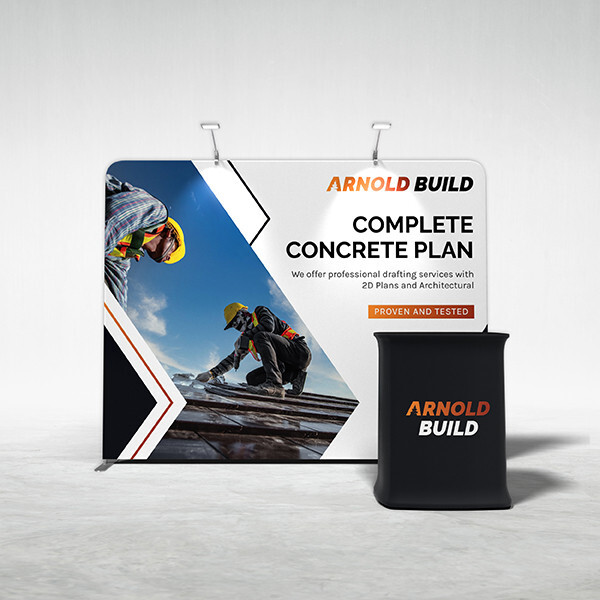
If this is your first trade show, start with a 10x10 trade show booth. A 10x10 gives you 100 square feet of floor space, which is enough for one backwall, one or two accent pieces like a banner stand or counter, and two to three staff members standing comfortably. It is the most widely available booth size at every convention center and the most affordable entry point for new exhibitors.
A standard 10x10 inline booth space costs between $2,000 and $5,000 to rent at most national trade shows, depending on the industry and the venue. Regional and local shows often run $800 to $2,000 for the same booth size. Your display hardware is a separate investment. A first-time exhibitor can outfit a 10x10 booth with a professional display for $400 to $3,500, depending on whether you start with a single retractable banner stand or a complete backwall kit with accessories.
Here is a general breakdown of trade show booth sizes by cost.
| Booth Size | Floor Space | Typical Space Rental | Display Investment |
|---|---|---|---|
| 10x10 | 100 sq ft | $1,500 - $5,000 | $400 - $3,500 |
| 10x20 | 200 sq ft | $3,000 - $10,000 | $1,500 - $7,000 |
| 20x20 | 400 sq ft | $8,000 - $25,000 | $5,000 - $25,000+ |
| 20x30+ | 600+ sq ft | $15,000 - $50,000+ | $10,000 - $50,000+ |
What we tell every first-time exhibitor: start with a 10x10 inline booth for your first two or three shows. You will learn more about your audience, your messaging, and your staff workflow in those first few events than any amount of planning can teach you. Upgrade your trade show booth size once you know what your booth needs to do, not before.
What Display Products Fit Each Trade Show Booth Size?
The right display depends on your booth size and your configuration. An inline booth with one open side has different display needs than a corner booth with two open sides or an island booth with four. Here is what we recommend for each trade show booth size based on what our customers actually order.
| Booth Size | Core Display | Accent Pieces | Optional Add-Ons |
|---|---|---|---|
| 10x10 Inline | 10ft backwall (SEG, tension fabric, or pop up) | 1-2 retractable banner stands | Branded table cover, counter, monitor |
| 10x10 Corner | 10ft backwall + side panel or L-shaped display | 1 banner stand at the open corner | Branded table cover, counter |
| 10x20 Inline | 20ft backwall or two 10ft sections | 2-3 banner stands | Counter, meeting table, monitor stand |
| 20x20 Peninsula | Multiple backwall sections (three exposed sides) | 3-4 banner stands, counters | Overhead hanging banner, monitor stands |
| 20x20+ Island | Perimeter backwalls or branded walls on all sides | Overhead hanging banner, 4+ counters | Meeting rooms, demo stations, storage |
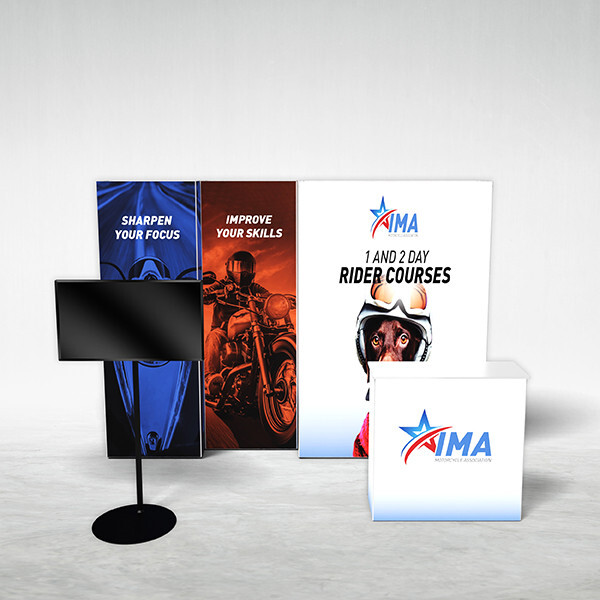
For a 10x10 inline booth, the most popular setup we sell is a 10ft trade show backdrop paired with a retractable banner stand and a branded table cover. That combination runs between $800 and $2,500 depending on whether you choose a standard SEG fabric display or a backlit trade show display with LED illumination. Backlit displays cost more upfront but they stand out dramatically on a crowded show floor. Our 10x10 booth ideas and layouts guide covers six specific configurations with pricing for each one.
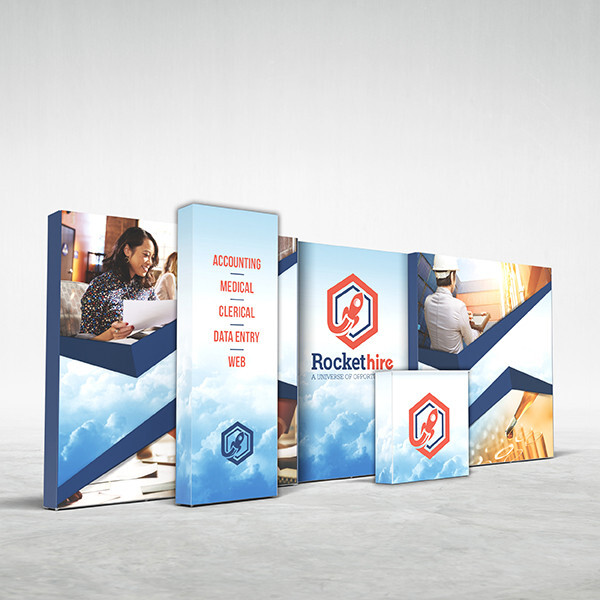
For a 10x20 trade show booth, the display investment scales up significantly. A 20ft backwall creates an unbroken branded surface that commands attention from far down the aisle. Most 10x20 exhibitors pair a 20ft backwall with at least two banner stands and a counter. The total display investment for a professional 10x20 setup typically runs $1,500 to $7,000. Our 10x20 booth upgrade guide walks through detailed layouts and pricing at every budget level.
When Should You Move to a Larger Trade Show Booth Size?
Not every exhibitor needs to upgrade. A 10x10 inline booth is the right trade show booth size for many companies across their entire show schedule. The question is whether your current booth size is limiting your results. Here is a quick way to evaluate.
| Your Current Size Works | Time to Consider an Upgrade |
|---|---|
| Your booth never feels crowded during peak hours | You are turning visitors away because the booth is full |
| Your backwall and displays fill the space without gaps | Your booth looks empty or undersized compared to neighbors |
| You staff the booth comfortably with 2-3 people | You need 4+ staff members and they are crowding each other |
| Your lead count meets or exceeds your goals | Your lead count has plateaued despite better graphics and messaging |
| You attend 1-2 shows per year | You attend 4+ shows per year and your brand is well known in the industry |
We see most exhibitors reach the upgrade point after their third or fourth show. By then, they have learned what their booth needs to do, their lead capture process is working, and the 10x10 space is physically limiting their ability to have conversations with visitors. That is when moving from a 10x10 to a 10x20, or from an inline to a corner booth, starts to make financial sense.
One important note about upgrading trade show booth sizes. You do not have to replace everything. Many exhibitors who move from a 10x10 to a 10x20 reuse their existing 10ft backwall as one half of the larger space. You can add a second backwall section, additional banner stands, and a counter to build out the other half. This phased approach protects your original investment and keeps costs manageable. Avoiding common first-time exhibitor mistakes like overbuying or underbuying for your actual needs will save you thousands of dollars over the life of your display.
What Are Island and Peninsula Trade Show Booth Sizes Used For?
Island and peninsula configurations are premium trade show booth sizes used by established brands at major industry shows. They start at 20x20 (400 square feet) and can run to 50x50 or larger. At that scale, you are not just setting up a display. You are designing an environment with dedicated zones for demos, meetings, reception, and product showcase areas.
For peninsula and island trade show booth sizes, the display requirements are fundamentally different from a standard inline setup. You are designing for visibility from three or four directions instead of one. That means:
- Multiple branded surfaces covering the perimeter or creating interior walls for meeting areas
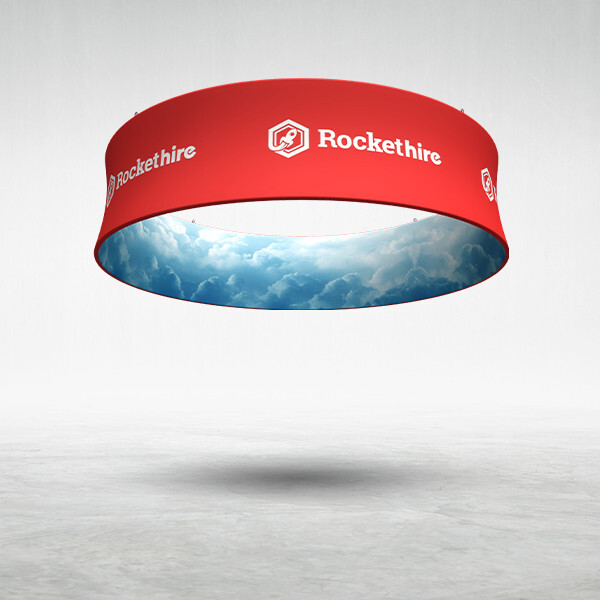
- An overhead hanging banner to draw attention from across the floor. Island booths at most venues are required to use overhead signage instead of tall backwalls that would block sightlines for neighboring exhibitors.
- Dedicated functional zones for meetings, product demos, and lead capture, each with its own branded display elements
- Counters and branded furniture positioned to guide traffic flow through the booth from multiple entry points
Most first-time exhibitors do not need to worry about peninsula or island trade show booth sizes for their first few shows. These configurations require a significant investment in booth space, display hardware, and on-site setup labor. If your trade show program has grown to the point where a larger booth size is the right move, talk to our team about what your floor plan requires. We build custom trade show environments for larger spaces, and we can help you plan the transition from a standard inline booth to a multi-sided configuration.
A pattern we see regularly: Exhibitors who skip the 10x10 and go straight to a 20x20 island booth for their first show almost always overspend on display hardware they do not need yet. Start with an inline booth, learn the floor, and let your results tell you when it is time to grow. The booth size should follow the strategy, not the other way around.
Trade show booth sizes do not need to be complicated. The right booth size for your first show is almost always a 10x10 inline with a clean, professional display that fits your budget. As your trade show program grows, you can move to a 10x20, upgrade your display hardware, or start exploring corner and peninsula configurations. Every Displayit display ships with custom-printed SEG graphics, hardware, and a carry bag or shipping case. We manufacture everything in-house at our facility in Buford, Georgia, and we have been doing it since 1996. If you are planning your first show or ready to move to a larger trade show booth size, schedule a consultation with our team. We will walk you through the booth sizes, configurations, and display options that match your goals.

About the Author
Jen Smithson is the VP of Marketing & Websites at Displayit, a U.S. based trade show display manufacturer that has been helping companies exhibit with confidence since 1996. With 20 years of experience in the trade show industry, Jen works across the entire organization to connect exhibitors with the right display solutions, from first-time buyers choosing their first booth size to enterprise teams planning multi-show schedules. Displayit designs, prints, and ships custom trade show displays from its facility in Buford, GA. For personalized guidance, schedule a free consultation with the Displayit team.