
I get asked about hanging banners more than almost any other trade show display type, and the questions are always the same. Will the venue let me hang one? How much does it really cost? Is my booth even big enough? Hanging signs are the single most visible element on any trade show floor. They are also the most misunderstood. At Displayit, we have been manufacturing custom hanging signs at our Buford, GA facility since 1996, and I have personally walked hundreds of exhibitors through the sizing, rigging, and venue approval process. This guide breaks down every trade show hanging sign we build, how rigging works, what the total cost looks like including labor, and which booth configurations actually qualify for overhead signage.
What sizes do trade show hanging signs come in?
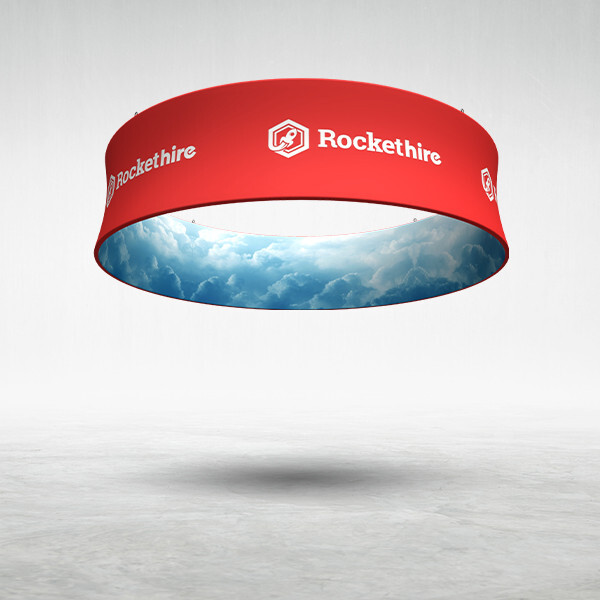
We build trade show hanging signs in two shapes (circle and square) across three sizes (10-foot, 15-foot, and 20-foot), all with a standard 4-foot height. Every hanging sign includes a collapsing aluminum frame, double-sided custom-printed graphics, a canvas carrying bag, and all hanging hardware. Here is how the six models compare:
| Hanging Sign | Shape | Assembled Size | Weight | Price |
|---|---|---|---|---|
| 10'x4' Circle Hanging Banner | Circle | 10' diameter x 4' tall | 32 lbs | $2,785 |
| 10'x4' Square Hanging Banner | Square | 10' x 10' x 4' tall | 62 lbs | $3,025 |
| 15'x4' Circle Hanging Banner | Circle | 15' diameter x 4' tall | 46 lbs | $3,750 |
| 15'x4' Square Hanging Banner | Square | 15' x 15' x 4' tall | 76 lbs | $4,355 |
| 20'x4' Circle Hanging Banner | Circle | 20' diameter x 4' tall | 68 lbs | $5,445 |
| 20'x4' Square Hanging Banner | Square | 20' x 20' x 4' tall | 90 lbs | $6,290 |
Every price above includes the aluminum frame, custom-printed double-sided graphics, a canvas carrying bag, and all hanging hardware. Prices do not include venue rigging labor, which is a separate cost covered later in this guide.
Circle or square: how do I choose a hanging sign shape?
This is the first question I ask every exhibitor who calls about a trade show hanging sign. Both shapes are visible from the same distance and both print in full color on double-sided fabric. The difference comes down to how your booth is configured and what your brand identity looks like on overhead signage.
What I tell exhibitors choosing a shape: Circle hanging signs are the most popular option we sell. They read well from every angle on the show floor because a round hanging banner has no corners to create dead sightlines. Square hanging signs work better for brands with angular logos, architectural booth designs, or booths that align tightly with the grid of the exhibit hall.
- Circle (round) hanging signs present the same visual profile from every direction. They weigh significantly less than their square counterparts at every size, which can reduce rigging labor time. A 15-foot circular hanging banner weighs 46 lbs compared to 76 lbs for the 15-foot square. Round shapes also tend to feel more approachable and are easier to center visually over booths that are not perfectly square.
- Square hanging signs align with the rectangular grid of most exhibit halls, which gives them a more structured, architectural look. They are heavier at every size because the frame spans four corners rather than forming a continuous ring. Square signs provide more printable surface area, which matters for brands running detailed graphics, taglines, or multiple brand elements on the sign face.
We see roughly 70% of our hanging sign orders go out as circles. If you are unsure which shape to choose, start with a circle. It works with any booth layout, any brand style, and any hall configuration.
How does hanging sign rigging work at a trade show?
Rigging is the part of the process that confuses most first-time hanging sign buyers, and I understand why. Unlike every other trade show display we sell, a hanging sign cannot be set up by your own team. It requires coordination with the venue and a licensed rigging crew. Here is how the process works step by step:
- Step 1: Confirm rigging availability. Before ordering your hanging sign, contact the convention center or your show's general services contractor (the company that manages freight, labor, and utilities for the show). Ask whether overhead rigging is permitted for your booth location and booth size. Some venues restrict trade show hanging signs to certain halls, ceiling heights, or booth sizes. Do this before spending anything.
- Step 2: Submit a rigging order. Once confirmed, submit a rigging request through the general services contractor. This request specifies the size and weight of your hanging sign, the height you want it hung at (typically 15 to 20 feet above the floor), and the rigging points above your booth space. The contractor will provide a quote for rigging labor.
- Step 3: Ship the sign to the venue. Ship your hanging sign to the convention center's advance warehouse or directly to the show floor with the rest of your booth materials. Every Displayit hanging sign ships in a single canvas bag with all hardware included.
- Step 4: The rigging crew installs it. On setup day, the venue's rigging crew uses the building's I-beam grid and chain motors or steel cables to suspend your hanging sign at the specified height. This happens before exhibitors enter the hall or during designated move-in windows. Assembly of the aluminum frame takes about 60 minutes with two people, and the rigging crew handles the lift from there.
- Step 5: Post-show teardown. The rigging crew lowers and detaches your hanging sign during teardown. You (or your freight carrier) pack it back into the canvas bag and ship it home or to your next show.
A pattern I see regularly: Exhibitors wait until two weeks before their show to ask about rigging and discover the venue's rigging deadline was 30 days out. Start the rigging conversation at least 6 to 8 weeks before your show date. This gives you time to confirm ceiling availability, get a rigging quote, and still meet your hanging sign production deadline with us.
Which booth sizes can use a trade show hanging sign?
Not every booth qualifies for a hanging sign. Venue rules, booth type, and your neighbors' sightlines all factor in. I have seen exhibitors order a trade show hanging sign for a booth that was never going to be approved for overhead signage, so I always run through this checklist before we process an order. For a full breakdown of booth types and configurations, see our guide: Trade Show Booth Sizes Explained.
| Booth Size | Booth Type | Hanging Sign Allowed? | Notes |
|---|---|---|---|
| 10x10 | Inline | No | Too small, blocks sightlines for neighboring booths |
| 10x20 | Inline | Rarely | Some venues allow for endcap or corner positions only |
| 20x20 | Island | Yes | Most common size for a first hanging sign order |
| 20x30 | Island | Yes | Can support 15-foot or 20-foot hanging signs |
| 30x30+ | Island | Yes | Often uses 20-foot hanging sign or multiple signs |
| 20x20+ | Peninsula | Sometimes | Depends on venue rules and which sides are open |
The key factor is whether your booth has open aisles on all four sides (island) or is anchored to a back wall (inline or peninsula). Island booths at most venues are actually required to use overhead hanging signs instead of tall backwalls because ceiling-mounted signage does not block sightlines for surrounding exhibitors. Peninsula booths are a gray area that varies by venue and by show. Inline booths of any size are almost always restricted from overhead signage.
What does a trade show hanging sign cost including rigging?
The price on the product page is only part of the total investment. Rigging labor is billed separately by the venue's general services contractor, and it is the cost that catches most exhibitors off guard. Here is what the full cost looks like at each hanging sign size:
| Hanging Sign Size | Sign Cost | Estimated Rigging | Estimated All-In |
|---|---|---|---|
| 10' Circle | $2,785 | $400 - $800 | $3,185 - $3,585 |
| 10' Square | $3,025 | $500 - $900 | $3,525 - $3,925 |
| 15' Circle | $3,750 | $600 - $1,000 | $4,350 - $4,750 |
| 15' Square | $4,355 | $700 - $1,200 | $5,055 - $5,555 |
| 20' Circle | $5,445 | $800 - $1,500 | $6,245 - $6,945 |
| 20' Square | $6,290 | $900 - $1,800 | $7,190 - $8,090 |
Rigging labor rates vary significantly by city and venue. Convention centers in Las Vegas, Chicago, and Orlando tend to have higher union labor rates than smaller regional venues. The estimates above are based on what our customers have reported across dozens of shows over the past several years. Always request a rigging quote directly from the general services contractor for your specific show before budgeting.
When should I use something other than a hanging sign?
A trade show hanging sign is not the right answer for every exhibitor, and I am always honest with our customers about that. Here are the situations where I recommend a different approach:
- Your booth is 10x10 or 10x20 inline. You will not get approval for overhead signage from an inline booth at virtually any venue. A backlit trade show display or a tall pop up backwall gives you the same high-visibility impact from aisle distance without needing ceiling access. See our full comparison: Backlit vs Standard Trade Show Displays.
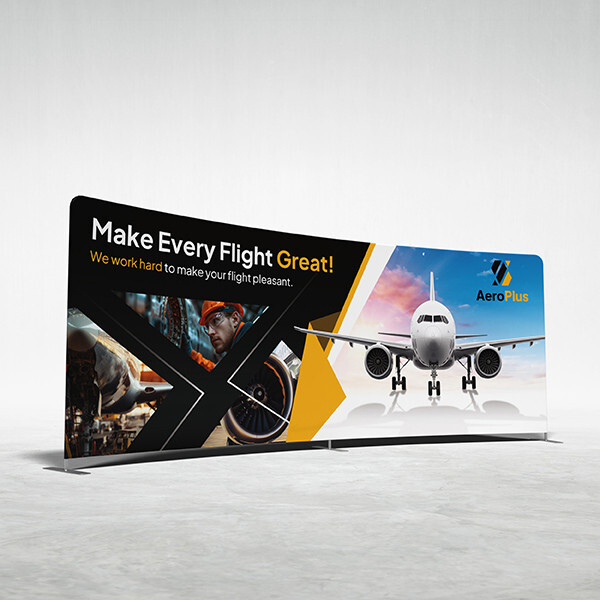
- Your total display budget is under $3,000. Once you add rigging labor to the cost of the sign itself, even the smallest hanging banner puts you above $3,000. If your budget is limited, a 10-foot tension fabric backwall and a banner stand will create a strong booth presence for $1,000 to $1,500 total.
- You exhibit at a different venue every show. Rigging approvals, labor quotes, and ceiling restrictions change at every convention center. If your schedule takes you to five different cities per year, the logistics of coordinating hanging sign rigging at each venue add up fast. A portable floor-standing display system travels with you and sets up the same way at every show.
- The ceiling height is under 15 feet. Some smaller venues, hotel ballrooms, and conference centers do not have the ceiling height to support a hanging sign at a useful visibility height. If the sign hangs too low, it becomes a hazard rather than a brand asset.
For exhibitors planning their first large booth, our 10x20 Trade Show Booth Ideas guide covers layouts and upgrade paths that can grow into hanging sign territory as your exhibit program expands.

Trade show hanging signs are the most impactful display element available to large-booth exhibitors. They put your brand above the crowd where it is visible from every corner of the exhibit hall. If you are exhibiting in a 20x20 or larger island booth and want to maximize your visibility, a hanging sign belongs at the top of your list. Browse all trade show displays to compare every display type we offer, or check the Interactive Trade Show Display Buying Guide for a personalized recommendation. If you are unsure whether your booth qualifies or which size is right, talk to our team and we will review your floor plan, confirm rigging availability with the venue, and recommend the right hanging sign for your show.
Frequently Asked Questions About Trade Show Hanging Signs
How high do trade show hanging signs hang above the booth?
Can I install a trade show hanging sign myself?
Do I need a hanging sign for a 10x10 booth?
Are trade show hanging signs double-sided?
How far in advance should I order a trade show hanging sign?

About the Author
Adam Chait is the CEO of Displayit, a U.S. based trade show display manufacturer that has been helping companies exhibit with confidence since 1996. Displayit designs, prints, and ships custom trade show displays from its facility in Buford, GA, serving thousands of exhibitors across every major industry. Adam leads a team of display specialists who work directly with exhibitors to match the right booth solution to their space, timeline, and budget. For personalized guidance, schedule a free consultation with the Displayit team.